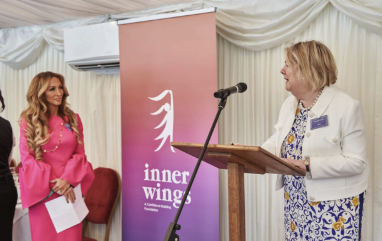
Confidence: A Luxury or a Life Skill? Inner Wings and Teaching Confidence in UK Schools
Let us talk about confidence.
Confidence is a word you hear so often. ‘He is very confident’, ‘she has lost confidence’ and, ‘I don’t feel confident doing that’ are phrases we hear all the time. So, is confidence inherent or can it be learned? So, is confidence inherent or can it be learned? A lot of people tend to think of confidence as a personality trait. Some people seem to have it; others just don’t. But is it truly fixed or can it be taught, modelled, learned and enhanced? Research suggests it can if you intervene at the right time.
A quiet crisis is unfolding for young people right across the UK. We see ever more pupils who are eager to learn but reluctant to get involved or contribute. They lack the self-confidence to do so. Teachers report that even the most capable pupils sit silently in class and never are seen to speak up. Similarly, employers report that graduates who are sometimes amongst the most talented are largely unable to speak with any authority. Anxiety in children and adolescents has escalated, especially in England, in line with recent survey findings. But whatever the underlying causes of this crisis ultimately points to one thing – low levels of confidence.
Having confidence is not to do with boasting or even necessarily with performance in its everyday sense. Rather it is to do with having faith in ourselves, being able to communicate successfully, being able to bounce back from adversity and with the willingness to expose oneself to challenge rather than merely hiding away. It is a factor in enabling opportunity to arise.
Which is why Inner Wings work is so important, and why I was honored to join their Advisory Council in 2024.
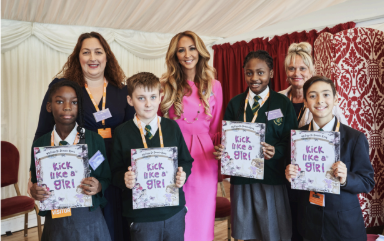
Bringing Confidence to the Classroom
The confidence our children have can be the difference between them saying ‘I’ll have a go’ and ‘I’ll avoid this and stay safe instead’. In childhood confidence is the foundation for trying new things and having exciting new experiences.
Founded in 2020 by Melissa Di Donato and Darren Roos, Inner Wings emerged from a simple but powerful realisation: that our schools are exceptional places to learn knowledge and curriculum, but have limited time and structured space to learn confidence as a tangible skill. And yet just as we are skilled at teaching literacy and numeracy, we can learn to teach children to find their voice, to articulate their thoughts and to understand they belong in any given situation.
Inner Wing’s work is making a difference inside and outside the classroom. Currently in partnership with over 230 schools across the UK, Inner Wings has supported the development of 33,000 students and 1,100 teachers through its completely free confidence building programs.
Inner Wings has a range of workshops, delivered in interactive, hands-on sessions focusing on public speaking, communication, leadership and personal growth. These workshops are deeply experiential in nature, with participants on their feet and speaking throughout the duration of the workshops. This means that they receive constructive feedback, attempt new speaking strategies and are given the opportunity to learn and try again. What starts off as feeling uncomfortable and unfamiliar becomes easier and more natural over time.
Inner Wings schools’ confidence building programme is implemented across all year groups in Primary School and all key stages in Secondary School, ensuring pupils are empowered before they enter adolescence and supported during it. Inner Wings creates a positive platform for more reserved pupils to flourish, which as educators witness first hand as pupils with low self-esteem and inhibition start to undergo real changes. Students who previously avoided eye contact start to facilitate presentations to their peers; students who had never expressed their future aspirations to anyone, start to articulate their ambitions for the first time.
Mental health issues affecting 6–16 year old children in England have increased dramatically in recent years. As wellbeing, inclusion and choice are all fundamental to creating confident young people, building confidence has a clear preventative value. Therefore, building confidence is not an option, it is an essential intervention.
Confidence Beyond the Classroom
Social and Emotional Skills (SES) are a determinant factor in a wide range of educational, labour market and life outcomes. The OECD also found that the same skills contribute to adults’ wages, job satisfaction and civic engagement.
Adolescent research, including the annual Girlguiding UK survey, shows that confidence, particularly among girls, often dips sharply in early teenage years. When young people begin to doubt their worth or capability, it shapes their decisions. They opt out of opportunities and self-select away from leadership. They narrow their own horizons long before anyone else does.
Confidence and social mobility are closely linked. One child may well have a plethora of talents, but perhaps lacks the confidence to apply for a scholarship, to be able to articulate themselves in an interview, to be the leader in a team. In simple terms, confidence is a life skill with far reaching consequences.
Schools can not single-handedly assume this task, since educators already have a heavy burden to carry in terms of their workload and curriculum. Inner Wings works to provide a foundation that provides students with the confidence and life-skills they need to make the knowledge they acquire in school usable.
For decades I have dedicated my career to increasing opportunities for women and youth. Time and time again, I have witnessed how lack of confidence has the ability to prevent even the most talented of individuals from assuming leadership roles. When young people learn to articulate their ideas, absorb criticism and believe in their abilities, they become more engaged and empowered citizens.
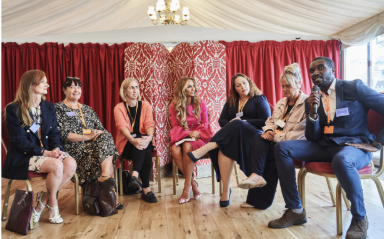
In September 2024 I was honoured to host the launch of Inner Wings’ Advisory Council at the House of Lords. The Council is made up of leaders from politics, academia and business and will play a key role in our work to improve impact, develop new partnerships and ensure good governance as we grow as a charity.
I will end where I began: with children’s potential. The more we invest in children, the more we invest in our collective future. School leaders, consider bringing these tools to your classrooms. Those who have the ability to fund our work are ensuring that confidence-building activities remain accessible to the children who need them the most.